How to Choose the Best Forklift Collision Detection System?
Forklifts are essential in many industries, but they also pose serious risks. A Forklift Collision Detection System can greatly enhance workplace safety. Choosing the right system is not simple. There are various features and options to consider.
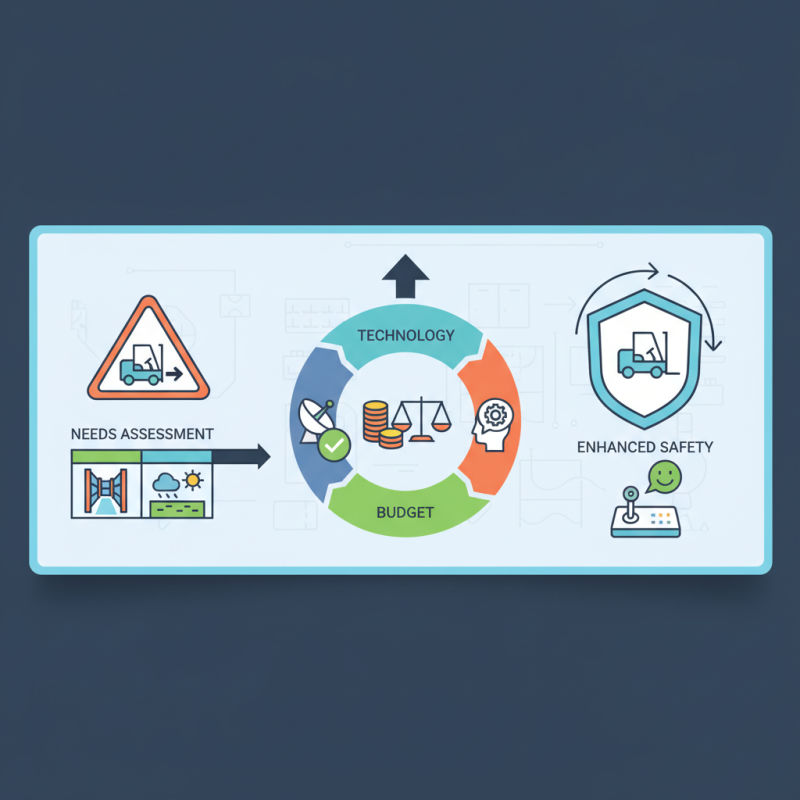
Understanding your specific needs is crucial. Different environments require diverse solutions. For instance, warehouses with narrow aisles need systems tailored for tighter spaces. Meanwhile, outdoor operations might focus more on weather resistance. Evaluating the technology's effectiveness is vital. Some systems may have advanced sensors but could fall short in real-world applications.
Budget constraints cannot be ignored either. The best system must balance cost and functionality. Simple doesn't always mean ineffective. It's tempting to go for high-tech features, yet they may complicate operations. Reflecting on practical usability is important when making a choice. In the end, a Forklift Collision Detection System should enhance safety without overwhelming the operators.
Understanding Forklift Collision Risks in Industrial Environments
Understanding forklift collision risks in industrial environments is crucial for workplace safety. According to the National Safety Council, forklift accidents cause over 20,000 injuries annually in the U.S. These incidents can lead to severe injuries and costly downtime. In crowded warehouse settings, operators often face limited visibility. This can heighten the risk of accidents, especially in busy aisles.
Data from the Occupational Safety and Health Administration (OSHA) reveals that improper forklift operation accounts for a significant percentage of workplace injuries. A startling statistic states that nearly 70% of all forklift accidents occur due to human error, often linked to poor training. When employees aren't adequately trained, their likelihood of making mistakes increases, posing a risk to themselves and others.
The environment plays a critical role in these accidents. Factors like poor lighting and narrow pathways can exacerbate collision risks. Additionally, maintaining clear pathways is often overlooked. This negligence can significantly contribute to accidents. Companies must reflect on their operational practices and consider upgrading their safety systems. Investing in collision detection technology may help address these risks, reducing injury rates and improving overall safety for everyone involved.
How to Choose the Best Forklift Collision Detection System? - Understanding Forklift Collision Risks in Industrial Environments
| Feature | Importance Level | Detection Technology | Response Time | Compatibility |
| Real-time Monitoring | High | Lidar | < 0.5 seconds | High |
| Audible Alerts | Medium | Ultrasonic | < 1 second | Medium |
| Visual Indicators | Medium | Cameras | < 1 second | High |
| Automatic Braking | High | Lidar & Cameras | < 0.2 seconds | High |
| Software Integration | High | N/A | N/A | High |
Key Features of Effective Forklift Collision Detection Systems
Choosing an effective forklift collision detection system is crucial for safety. Key features can make a significant difference in operation. First, sensors should be reliable and durable. These sensors must work in various conditions, such as low light and dust. They should detect obstacles quickly. Response time is vital to prevent accidents. A system that delays due to slow sensors can be problematic.
Another essential feature is real-time monitoring. The ability to track movements could prevent collisions before they happen. Real-time data allows operators to respond immediately. Some systems offer integration with other safety tools. This feature enhances overall warehouse safety. However, too many features can complicate operations. Simplicity is often overlooked. A user-friendly interface is valuable.
Training operators to use these systems is equally important. Without proper training, even the best system might fail. Regular updates and maintenance are necessary, but they are sometimes neglected. Many facilities forget this aspect. Evaluating the balance between technology and human factors is critical. Even with advanced detection systems, human error can lead to incidents.
Forklift Collision Detection System Features Comparison
Evaluating Technology Options: Sensors vs. Cameras for Collision Detection
When choosing a forklift collision detection system, the technology options available are vital. Sensors and cameras each have their pros and cons. Sensors, for instance, are typically more affordable and easier to install. They can detect nearby objects quickly. However, they may struggle to identify smaller items or distinguish between moving and stationary obstacles.
On the other hand, cameras provide a visual perspective that can enhance safety. They can capture clear images of potential hazards. Yet, they come with higher costs and require better lighting. Moreover, relying solely on cameras may lead to blind spots in certain conditions. This raises questions about the effectiveness of either choice in diverse working environments.
Reflecting on these options can be complex. Every warehouse or construction site has unique challenges. How do you ensure that the system chosen fits? There's no one-size-fits-all answer. Understanding the specific needs of your operation is crucial. This consideration makes selecting the right system more than just a technical decision; it's about enhancing overall safety.
Regulatory Standards and Compliance for Forklift Safety Systems
When considering collision detection systems for forklifts, it’s crucial to adhere to regulatory standards. The Occupational Safety and Health Administration (OSHA) outlines clear guidelines for forklift safety. These regulations require that systems must effectively reduce the risk of accidents. A study found that compliance with these guidelines can decrease workplace incidents by nearly 25%.
Employers should also consider the ANSI/ITSDF B56.5 standard. This specifies performance criteria for forklift trucks equipped with collision detection technologies. Following these standards ensures that systems are reliable and effective. However, many facilities still overlook such compliance. This oversight can lead to costly accidents.
Regular audits and training sessions help ensure adherence to these safety standards. Yet, many organizations do not conduct them frequently enough. A report revealed that 60% of companies lack routine evaluations of their safety systems. This gap can result in unpredicted hazards on the warehouse floor. Proper implementation of safety features is essential, but so is ongoing commitment to compliance.
Cost-Benefit Analysis: Investment in Collision Detection Systems
Investing in a forklift collision detection system is a key decision for many businesses. It can enhance safety in busy environments. However, evaluating the initial costs alongside potential benefits is crucial. A collision detection system can reduce accidents. Fewer accidents mean lower repair costs and less downtime. Considering these factors is vital for a successful investment.
When assessing the cost-benefit ratio, businesses should analyze both direct and indirect savings. Direct savings come from reduced repairs and insurance costs. Indirect savings include improved employee morale and productivity. Workers feel safer. This leads to a more focused workforce. Yet, an expensive system may not always yield significant returns. Companies must ensure they select a system that fits their unique operational needs.
Moreover, maintenance and updates can add hidden costs over time. Initial investment should not be the only focus. Regularly evaluate the system’s performance. Are there frequent accidents despite its presence? Companies may need to rethink their choices if safety improvement isn't evident. Balancing cost and effectiveness requires careful thought and ongoing assessment in choosing the right collision detection system.
