How to Choose the Right Window Replacements for Your Home?
Choosing the right window replacements for your home can feel overwhelming. Windows are not just a design choice; they impact energy efficiency and security. The right windows can illuminate your space and enhance its overall aesthetic.
When selecting window replacements, consider materials and styles that suit your home’s architecture. Vinyl, wood, and fiberglass each have distinct benefits. It’s important to think about maintenance and longevity, as well. Do you want a classic look or something modern?
Budget is also crucial when considering window replacements. Quality often comes with a price tag, and cheaper options may lead to regrets. Research and reflect on your choices. Ultimately, carefully assessing your needs will guide you to the best window replacements for your home.
Understanding Different Types of Window Replacement Options Available Today
Choosing the right window replacements can feel overwhelming. There are many options available today, each with unique features. Understanding these options will help you make an informed choice for your home.
Vinyl windows are popular due to their affordability and low maintenance. They come in various styles and colors. However, they may not provide the same aesthetic appeal as wood. On the other hand, wood windows offer exquisite beauty and natural insulation. Yet, they require regular upkeep. Consider your budget and personal style when deciding between these materials.
Tips: Always check the energy ratings of windows. Look for options that enhance your home's efficiency. Also, think about the climate in your area. Think about durability and weather resistance. You might find the perfect fit for your home after careful reflection. If you rush this decision, you may regret it later.
Evaluating Energy Efficiency Ratings and Its Impact on Long-Term Costs
When considering window replacements, energy efficiency ratings play a vital role. These ratings indicate how well a window can insulate your home. Higher ratings typically mean better insulation. This can lead to lower energy bills over time. However, it’s essential to understand what the ratings actually entail. Not all energy-efficient windows are the same. Some may promise lower costs but could lead to higher long-term expenses.
Look closely at U-factor and Solar Heat Gain Coefficient (SHGC). The U-factor measures heat loss. A lower U-factor is better for winter. SHGC tells you how much heat enters from sunlight. This is crucial for warmer climates. Picking windows with the right balance can save money. Yet many homeowners ignore these details, focusing only on appearance.
Don't overlook installation quality. Even the most efficient windows can fail if not installed correctly. This could negate any potential savings. It’s a reminder that a beautiful window isn’t always the best choice. Research and ask questions. Make informed decisions based on specific needs rather than trends. It's worth taking the time to get it right.
How to Choose the Right Window Replacements for Your Home?
| Window Type |
Energy Efficiency Rating (U-Value) |
Solar Heat Gain Coefficient (SHGC) |
Estimated Cost ($) |
Long-Term Savings (10 Years) ($) |
| Double Glazed |
0.30 |
0.25 |
300 |
1000 |
| Triple Glazed |
0.20 |
0.20 |
500 |
1500 |
| Energy Star Rated |
0.25 |
0.22 |
400 |
1200 |
| Low-E Coated |
0.25 |
0.30 |
350 |
1100 |
| Vinyl Frames |
0.32 |
0.27 |
250 |
800 |
Assessing Material Choices: Wood, Vinyl, and Aluminum Window Durability
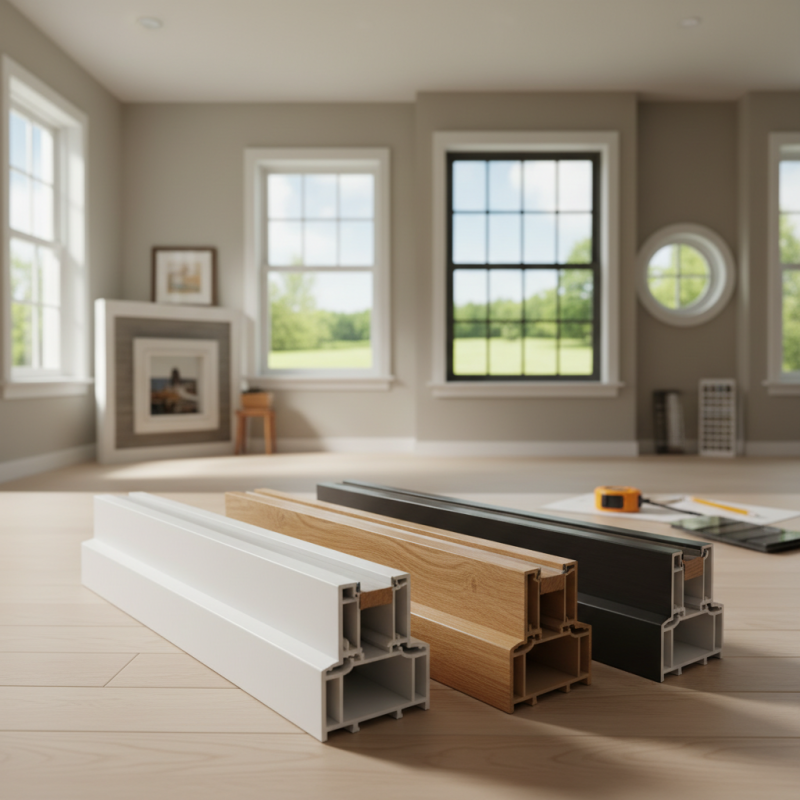
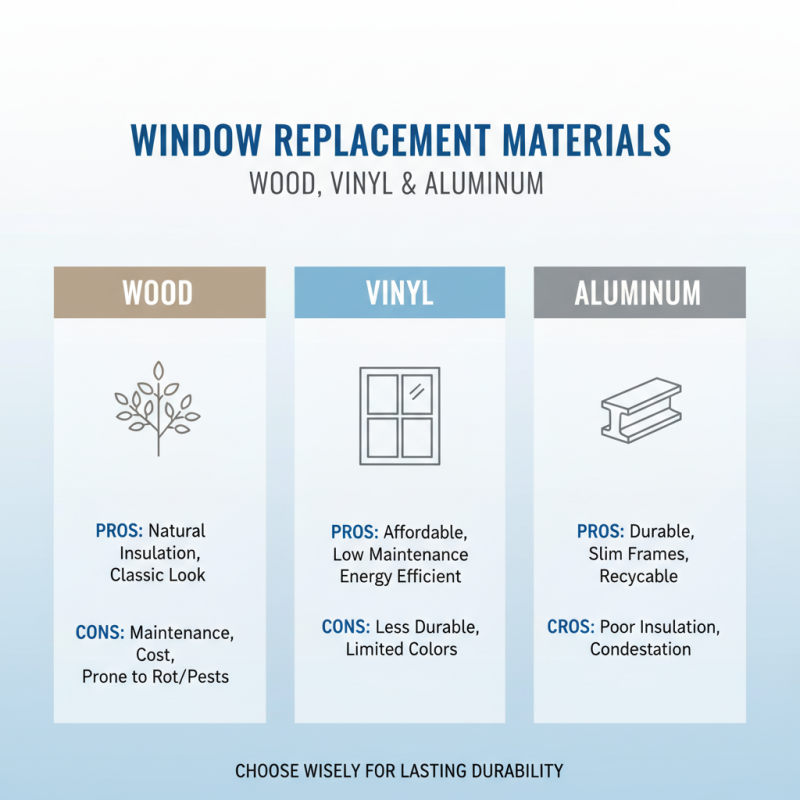
When it comes to window replacements, choosing the right material is crucial. Three popular options are wood, vinyl, and aluminum. Each material has its own set of advantages and drawbacks regarding durability.
Wood windows offer natural beauty and excellent insulation. However, they can be prone to rot and require regular maintenance. According to the National Association of Home Builders, wood frames may last about 30 years with proper care. But homeowners must stay vigilant about weather changes and pests causing damage.
Vinyl windows are known for their low maintenance and energy efficiency. They resist moisture, which enhances longevity. A recent report from the U.S. Department of Energy suggests that quality vinyl windows can last over 40 years. Nonetheless, poor-quality vinyl may warp in extreme temperatures. This can lead to costly replacements earlier than anticipated.
Aluminum windows are lightweight and durable. They resist corrosion and offer strength. Yet, they are less insulated than wood or vinyl. A study from the American Architectural Manufacturers Association shows that aluminum frames may last for 20 years with proper upkeep. The trade-off lies in their insulation properties, which aren't as effective as other materials.
Selecting the Right Style to Match Your Home's Architecture and Aesthetics
When selecting window replacements, style matters. Your windows should complement your home's architecture. A well-matched window can enhance both aesthetics and value. According to a recent industry report, homes with consistent architectural styles can see up to a 10% increase in market value.
Consider the local architecture. Traditional homes often benefit from classic double-hung windows. Modern designs may call for sleek, minimalistic options. Distinct styles can evoke different feelings. A Victorian home may seem out of place with ultra-modern windows. Ensure the materials reflect the era. Wood or fiberglass might serve better for historical homes, while vinyl options shine in contemporary settings.
The size and placement of windows also impact appearance. Overly large windows on a small house can seem clumsy. Aim for balanced proportions that respect the original design. Remember, not every choice will be perfect. Mistakes can lead to an awkward façade. A careful evaluation of your home’s architectural vocabulary is necessary for a successful upgrade.
Considering Professional Installation vs. DIY: Costs and Benefits Analysis
Choosing the right window replacements can be tricky. One key decision is whether to hire a professional or tackle the project yourself. Both options have their own costs and benefits that need careful consideration.
Professional installation usually comes with a higher price tag. Skilled installers often guarantee quality work. They may catch potential issues that an inexperienced homeowner might overlook. However, the cost may stretch your budget, especially if you have multiple windows to replace.
On the other hand, DIY installation might save you money upfront. You have control over the pace and the process. But there's a risk involved. A misstep can lead to leaks or energy inefficiencies. If you lack experience, it could take longer than expected. Mistakes can also lead to increased costs later on. Weighing these pros and cons is crucial to making the right decision.